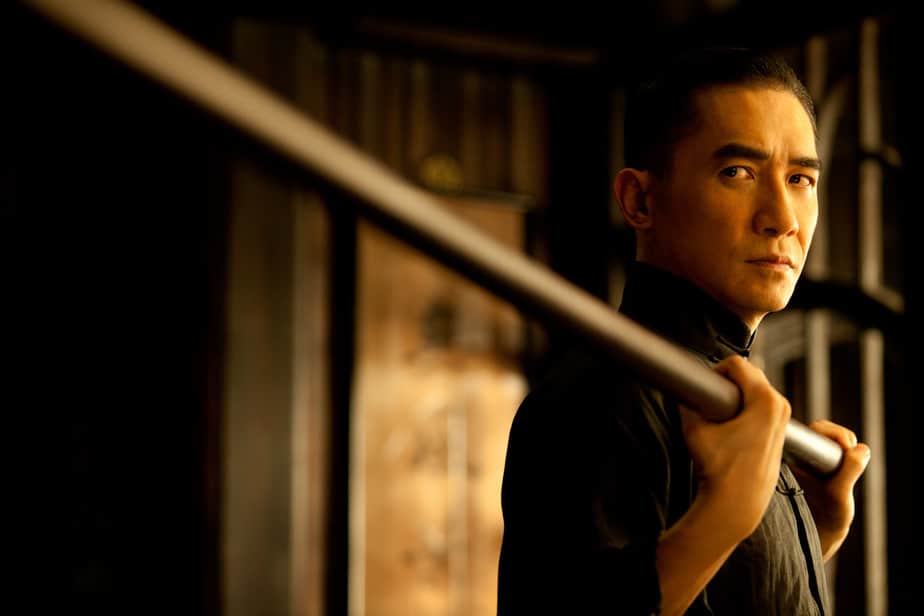
The Baht Jahm Do is the last and most advanced skill set
learned in the Ving Tsun Kung Fu system. The Ving Tsun practitioner’s hands
become ten times more deadly as his hands have now become blades. When learning
to use these weapons one must also learn to consider and incorporate a certain
state of mind. A state of mind that will allow you to do what is necessary in a
life or death situation even if it involves killing. This is a lot to consider
and should not be taken lightly. One has to ask themselves the following
questions, are my skills sharp enough that I could kill if necessary. Do I
possess the mental fortitude necessary to kill if needed? Under what
circumstances would I be willing to take a life? Under what circumstances is a
lethal response legally justifiable? This is not our natural state, in our everyday
lives we do not contemplate killing on a regular basis, but it is important to
have the ability to instantly access this frame of mind if the need arises.
We are not speaking of a psychopathic mindset, more akin to resolute
single-mindedness; being fully in the present moment and 100% committed to
doing what must be done. It is not rooted in emotions like anger or fear, it is
rooted in awareness and clarity. As regular people living our everyday day
lives we rarely if ever encounter a set of circumstances that would make this state
of mind necessary. However it is important to know what your mental, physical,
and spiritual limitations are and to be able act fully and efficiently within
those parameters. Spend some time with these ideas and take an honest
assessment of yourself, better now than in a moment of crisis.
1.Get off the line of attack As your opponent initiates his attack, get
out of the way. Do your best to get off of the line of attack. The manner in
which you do this is very important it is not a dodge or a retreat. You should move
just enough so that you do not get hit and there should be a forward component
to your movement but we’ll get into that more a little later.
2.Occupy Centerline As you are moving in reference to your adversary
you must forcefully occupy your centerline. Punches, kicks, and deflections
must be employed with energy and commitment as you break critical distance. Halfhearted
attempts will cause you to lose the opportunity to gain superior position and
put you in danger.
3.Move Forward There are only four ways you can be
physically attacked with a punch or kick as defined by the type of energy being
used in the attack (long or short) and the path that the attack takes through
space (linear or circular). For linear attacks you want to move ever so
slightly off the line and then move forward while occupying centerline. For
circular attacks you can move outside the arc of the attack and deflect it or
move inside the arc of the attack to receive and dissipate it. In either case
it is important to create the opportunity to move forward to engage and land a
finishing blow. Use your sensitivity to problem solve if your attempts to strike
are thwarted. Engage, bridge, and finish as quickly as possible. The longer you
take the higher the probability something can go wrong.
Many people use the term Karate as
a generic term for martial arts. This is incorrect, Karate is a specific term
for a specific martial art. Karate is a Japanese form of unarmed combat
specializing in various punches and kicks. There are also several different
styles of Karate each with unique methods and tactics. It really irritates
serious martial artist when Karate is used as a generic term for all martial
arts, so try not to do that.
2.You have to register your hands as deadly
weapons
There is a very popular urban legend that
trained fighters must register their hands as deadly weapons. This is not true
in any way shape or form. However a trained fighter does have to consider any
legal ramifications if he uses his training on the street. Any use of force that
is greater than what would be necessary to neutralize a perceived threat could
be grounds for prosecution.
3.It’s just for kids
When many people think about
martial arts they think of it as character building and exercise for young
children. As if there aren’t adults that could use some exercise and character
building. Seriously speaking, martial arts practice is a worthy pursuit for
anyone from age 8 to 80. There are hundreds if not thousands of different
martial arts that one could learn. All you have to do is find something that
suits your physicality, level of fitness, and your personality and then get
started. It is by no means just for kids!
4.I
want to learn the ultimate martial art
There is no one martial art that rules them
all. There is no one system that you can learn that will make you invincible.
The effectiveness of any given martial arts depends a great deal on the
individual practitioner. There are some people who are so talented they can
make something that seems totally impractical work every time. There are people
who are so challenged that even the simplest most straight forward technique
may not work for them.
5.UFC/MMA is like street fighting
MMA is a wonderful sport that
requires talent, skill, dedication and many many hours of training. MMA has
rules and regulations meant to insure the safety of its participants and give
them the opportunity to showcase their very impressive skills. It is in no way
nor does it intend to be an approximation of a street fight. Street fights have
no rules, no rounds, often there are no winners, and many losers. Street
fighting is not fair, it is often not one on one mutual combat and very likely
involves weapons. If your primary interest in martial arts is to become a
successful street fighter then there are some other issues you may want to
address prior to beginning your martial arts study.
It is important to remember that Ving Tsun training is about
developing attributes and internalizing principles, it is not about
accumulation. It is often the case that a junior todai (student) will look at
what his seniors are doing and have a desire to learn it. There’s nothing
wrong with that as long as the student understands that his ability to perform what
his seniors are doing is determined by how well he understands the material he
or she is currently studying. There is really no beginner or advanced training
it’s all just Ving Tsun but we have to start somewhere and we must move forward
in a logical fashion in order for the skills to be developed properly. If the process is rushed or if you are operating under a misapprehension there will be holes
in your Kung Fu that will be difficult to correct later.
Let’s take Pak Sao as an example. Pak Sao doesn’t look like
much yet every essential attribute and principle can be explored via Pak Sao.
The worst thing you can do is to interpret Pak Sao as some sort of combative
drill i.e. “blocking punches”. Pak Sao is essentially a physical discussion of
centerline, energy, and hand replacement. The key to gaining anything out of
the Pak Sao exercise is to understand it in this context. To perform the exercise
in a perfunctory manner while thinking about what comes next is a waste of
time. This is true for all the exercises leading up to Chi-Sao.
If you cannot teach someone Pak Sao beyond the physical choreography
then you do not understand the drill. If at any stage in your training you
cannot explain what you are doing and why you are doing it then by definition
you do not know what you are doing.
Treat each stage of your training like a research project,
try to glean as much insight and skill as you can prior to moving on to the next
phase. Do not be eager to move on prematurely. Even consider not taking the
opportunity to move forward if you know within your heart you are not ready.
It is also very important to help your sidai (juniors), this
will improve your Kung Fu immensely, Once again the best proof that you have a
firm understanding of something is your ability to explain and convey it to
someone else…face to face, mind to mind, heart to heart.
Everyone who loves Kung Fu movies has seen the unbeatable technique where the kung fu master is able to touch specific points on his opponent's body to cause various effects ranging anywhere from lost of various bodily functions up to and including death. The effect of the technique could be immediate or could takes days, weeks, or months all depending on the desire of the person applying the technique. Who wouldn't want to master the five point palm exploding heart technique?
One has to wonder is this in any way shape or form representative of reality. In my opinion there is a shadow of truth in the various movie portrayals of the so called Dim Mak (death touch). Anyone with a basic knowledge of anatomy and some very basic training could take advantage of obvious anatomical weak points on the body that if struck would cause temporary to permanent injury and or death.Targets such as the eyes, ears, nose, throat, solar plexus, groin etc.
That 's not really quite the theatrical effect we were looking for, another possibility is deep knowledge of physiology and anatomy. If a highly skilled martial artist was also trained as a doctor he would know precisely where to strike to create specific effects and shut down specific bodily systems. Although this is closer to what one might imagine it's still not quite the same.
One last option might be an expert martial artist who is also an expert in traditional chinese medicine. With this knowledge he may be able to attack the body's energetic network of meridians and cause more subtle negative effects to the intended target. This is probably the least likely scenario as those who possess very deep martial arts knowledge as well as deep knowledge of TCM are very rare indeed...
It may seem that the Ving Tsun system has limited footwork,
in actuality there is a great deal of footwork in the system hidden in plain
sight. The Ving Tsun Kung Fu system contains linear, circular, and angular footwork.
The elements of Ving Tsun footwork are contained in the forms, exercises, and
weapons training.
In some ways learning Ving Tsun is like having a set of
Legos, there are a variety of building blocks of various shapes and sizes. What
you do with those building blocks is based on your own intelligence and
creativity. Much of the basic knowledge of the system is explicit, the intermediate
to advanced level knowledge is mostly implicit, do the work and you will figure
it out. This is how it goes for learning the footwork as well as anything else
at the higher levels.
For the purposes of training and research I would suggest
the following categories.
1.Maintaining and controlling distance
2.Closing to bridge and finish (while minimizing
your chances of being hit)
3.Close range footwork based on contact
sensitivity
4.All of the above versus an armed opponent
This will serve as a great study and research guide and help
you analyze what you are learning while you experiment with how it can be used.
I am not going to get into specifics because the real learning is in your experience,
experimentation, and discussion.
From a layperson’s standpoint one of the most impractical
weapons you could learn how to use is the Ving Tsun Long Pole. How many scenarios
can you imagine where it would be necessary to defend yourself with a 9 foot
pole. If anyone can think of a realistic scenario when this would be the case
please email me at sifubryant@vtkfsystem.com.
All joking aside, there is a great deal of practical benefit in becoming
proficient with the Luk Dim Poon Kwan (6 and ½ point pole).
The first benefit is physical conditioning, you must have coordinated
full body strength as well as stamina to use the pole. As a matter of matter of
fact it is recommend that you do at least three months of moving low stance
work (Jin Choi) before you even touch the pole. Many do not even complete this
process simply because of lack of will power.
That reminds me of another benefit of Ving Tsun pole
training, developing mental toughness. Having the will power to force your body
to its limits and endure a training process that many will find very
challenging and unpleasant. Of course the attributes of discipline and mental
toughness have value in everyday living. There are many things worth doing that
we may find challenging and unpleasant.
The last benefit I will discuss is punching power. As I
mentioned previously it takes full body coordinated strength to wield the Luk
Dim Poon Kwan. The process of developing this kind of strength and power and
the ability to express it at the end of a nine foot pole also develops
significant punching power. In unarmed combat we want our punches not only to
be physically damaging but also psychologically demoralizing. When you hit
someone you don’t want them to simply get angry, you want them to reflect
deeply on their life and the choices that led them to such severe punishment. You want to extinguish both their ability and desire to fight.